
Blog
Ferrari 456 Ferrari: A Complete Guide to the Iconic V12 Grand Tourer

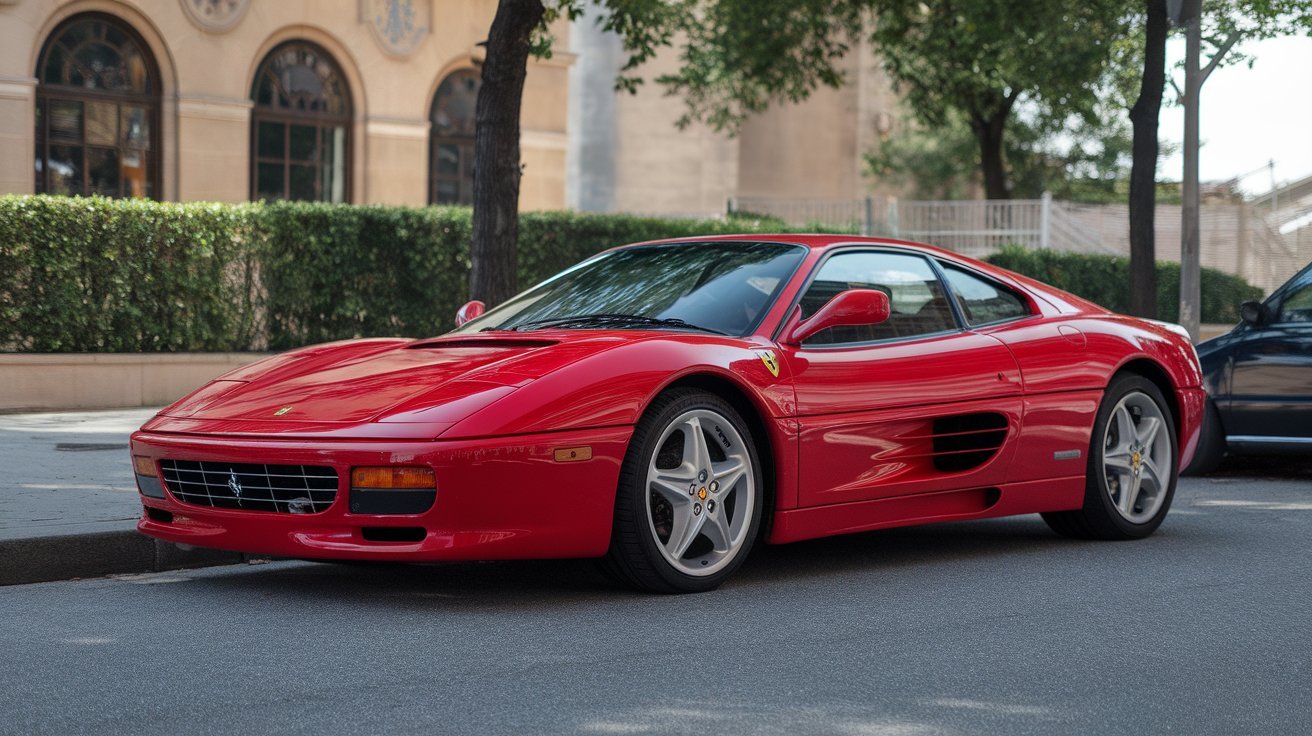
The Ferrari 456 GT remains one of the most distinctive front-engine grand tourers ever produced by Ferrari. Introduced in the 1990s, the 456 combined a naturally aspirated V12 engine, elegant Pininfarina styling, genuine four-seat practicality, and the long-distance comfort expected from a high-end Ferrari GT. Rather than focusing solely on track performance, Ferrari developed the 456 as a car capable of delivering extraordinary speed while remaining refined enough for extended journeys.
Today, the Ferrari 456 Ferrari is increasingly appreciated as an understated modern classic. Its restrained appearance, powerful V12 character, manual-transmission availability, and 2+2 configuration make it particularly interesting to enthusiasts who want a Ferrari that feels both special and usable. The model was later developed into the improved 456M GT, giving the nameplate an extended production life before the arrival of the Ferrari 612 Scaglietti.
Ferrari 456 GT: The Story Behind the Grand Tourer
The Ferrari 456 GT represented an important return to the company’s traditional front-engine V12 grand touring philosophy. Ferrari had a long history of producing powerful front-engine GT cars, but the 456 brought that formula into the modern era with sophisticated engineering and contemporary styling.
The name 456 was connected to the engine’s individual-cylinder displacement, while the GT designation emphasized the car’s grand-touring mission. Instead of being designed primarily as a lightweight racing-inspired machine, the 456 was intended to cover long distances rapidly and comfortably.
Its front-mounted V12 gave the car a distinctive character. Contemporary testing described the 456GT as remarkably quiet, comfortable, and user-friendly for such a powerful Ferrari. Its combination of speed and refinement made it particularly suitable for high-speed touring.
The design came from Pininfarina, Ferrari’s longtime styling partner. The result was an elegant coupe with a long hood, smooth bodywork, restrained detailing, and proportions that avoided many of the exaggerated visual elements associated with some exotic cars of the period.
Ferrari 456 Engine and Performance
At the heart of the Ferrari 456 is its naturally aspirated 5.5-liter V12 engine, one of the principal reasons the model remains desirable among Ferrari enthusiasts. Contemporary specifications placed output at roughly 436 horsepower for the original 456GT, while later 456M versions received a modest power increase.
The engine’s naturally aspirated character is central to the 456 experience. Power delivery is progressive, the throttle response is immediate, and the V12 soundtrack becomes increasingly dramatic as engine speed rises. This makes the car feel fundamentally different from modern turbocharged grand tourers.
Performance was equally impressive for a luxury-oriented four-seat Ferrari. Period testing recorded a top speed around 186 mph for the 456GT, putting it firmly among the fastest grand touring cars of its generation.
The engine was paired with a six-speed manual transmission as the enthusiast-oriented choice, while Ferrari also offered the 456 GTA with a four-speed automatic transmission. The automatic appealed to buyers prioritizing relaxed cruising, whereas the manual transmission added another level of interaction to the V12 driving experience.
Ferrari 456 Interior, Comfort, and Practicality
One of the Ferrari 456’s biggest advantages is its 2+2 seating configuration. While the rear seats are not comparable to those of a conventional family sedan, they provide an additional level of practicality that many sports cars simply cannot offer.
The cabin emphasizes traditional Italian luxury. Leather upholstery, high-quality materials, a driver-focused cockpit, and a relatively comfortable driving position help distinguish the 456 from more aggressively focused Ferrari models.
This combination of performance and comfort explains why the 456 was considered a genuine grand tourer rather than simply a high-performance sports car. The car could deliver tremendous speed while maintaining the refinement necessary for longer journeys.
The spacious front cabin also makes the 456 appealing to drivers who want an older Ferrari without accepting an extremely compromised interior. Contemporary evaluations highlighted the car’s comfort and user-friendly nature, particularly during high-speed touring.
Ferrari 456M GT: How Ferrari Improved the Formula
The Ferrari 456M GT arrived as the updated version of the original 456. The letter “M” stood for modificata, reflecting Ferrari’s revisions to the established design.
The 456M retained the fundamental formula—front-engine V12 power, rear-wheel drive, four-seat GT practicality, and elegant styling—but Ferrari introduced a series of changes to improve the vehicle.
The updated model received approximately 440 horsepower, along with revised interior details and subtle exterior changes. Rather than transforming the 456 into a completely different vehicle, Ferrari refined the original concept.
This makes the 456M particularly interesting today. It preserves the character of the original 456 while incorporating improvements made during the model’s production run.
For collectors and enthusiasts, specification can therefore matter considerably. A six-speed manual 456M GT combines the later model’s refinements with one of the most engaging transmission choices available in the range.
Why the Ferrari 456 Still Matters in 2026
The Ferrari 456 has become increasingly interesting in the modern classic-car market because it occupies a distinctive position between traditional Ferrari engineering and contemporary grand touring.
Modern Ferrari models are generally much more technologically advanced, faster, and more electronically sophisticated. Yet the 456 offers something that is becoming increasingly rare: a large naturally aspirated V12, traditional mechanical character, relatively discreet styling, and a genuine GT layout.
The model also sits within an important period of Ferrari history. The 456 established the front-engine V12 GT concept that would be followed by the 550 Maranello. The 550 used the 456’s basic platform concept while changing the configuration to a two-seat grand tourer.
Eventually, the Ferrari 612 Scaglietti succeeded the 456M. The 612 continued the company’s front-engine V12 four-seat grand-touring philosophy while introducing a newer aluminum construction and a larger engine.
As a result, the 456 is an important link between Ferrari’s earlier V12 GT tradition and the company’s later generation of sophisticated front-engine grand tourers.
Buying a Ferrari 456: What Enthusiasts Should Consider
Buying a classic Ferrari requires more than simply finding the lowest-priced example. With a Ferrari 456, condition, maintenance history, specification, and documentation can have a major influence on ownership satisfaction.
A prospective buyer should pay close attention to the car’s service records, engine condition, cooling system, suspension, electrical components, transmission, brakes, and interior. A complete history can be considerably more valuable than a superficially attractive car with unknown maintenance.
The timing-belt service is particularly important when evaluating older Ferrari V12 models. Buyers should establish when major maintenance was performed and whether supporting components were replaced at the appropriate intervals.
Electrical systems and age-related components also deserve careful inspection. Even an exceptionally maintained 456 is now a decades-old performance automobile, meaning seals, hoses, bushings, electronics, and other components can require attention.
The manual cars can be especially attractive to collectors, but rarity can also mean that finding a suitable example requires patience. Professional inspection by a technician familiar with classic Ferrari models is strongly recommended before committing to a purchase.
Ownership costs should also be approached realistically. A Ferrari 456 may be less intimidating to maintain than some mid-engine Ferrari models, but it is still a V12 Ferrari with specialist parts and servicing requirements. Period and modern assessments both emphasize that maintenance and fuel costs remain significant considerations.
Ferrari 456 Ferrari: A Modern Classic Worth Remembering
The Ferrari 456 Ferrari represents a particularly appealing interpretation of what a grand tourer can be. It does not rely on aggressive styling or extreme aerodynamic features to make an impression. Instead, its appeal comes from the combination of a naturally aspirated V12, elegant Pininfarina design, high-speed capability, luxurious interior, and genuine 2+2 practicality.
The later 456M GT strengthened that formula with carefully considered improvements while retaining the qualities that made the original car special.
In 2026, the Ferrari 456 deserves recognition not merely as an older Ferrari but as an important chapter in the company’s V12 GT history. It sits between the classic front-engine Ferraris of the past and the increasingly sophisticated grand tourers that followed. For enthusiasts who value mechanical character, understated design, long-distance ability, and the sound of a naturally aspirated V12, the 456 remains a remarkably compelling automobile.
Its greatest strength may be its balance. The Ferrari 456 is fast without being harsh, luxurious without losing its sporting identity, and practical without sacrificing the emotional character expected from a Ferrari. That combination helps explain why this understated V12 grand tourer continues to attract collectors and enthusiasts decades after its introduction.
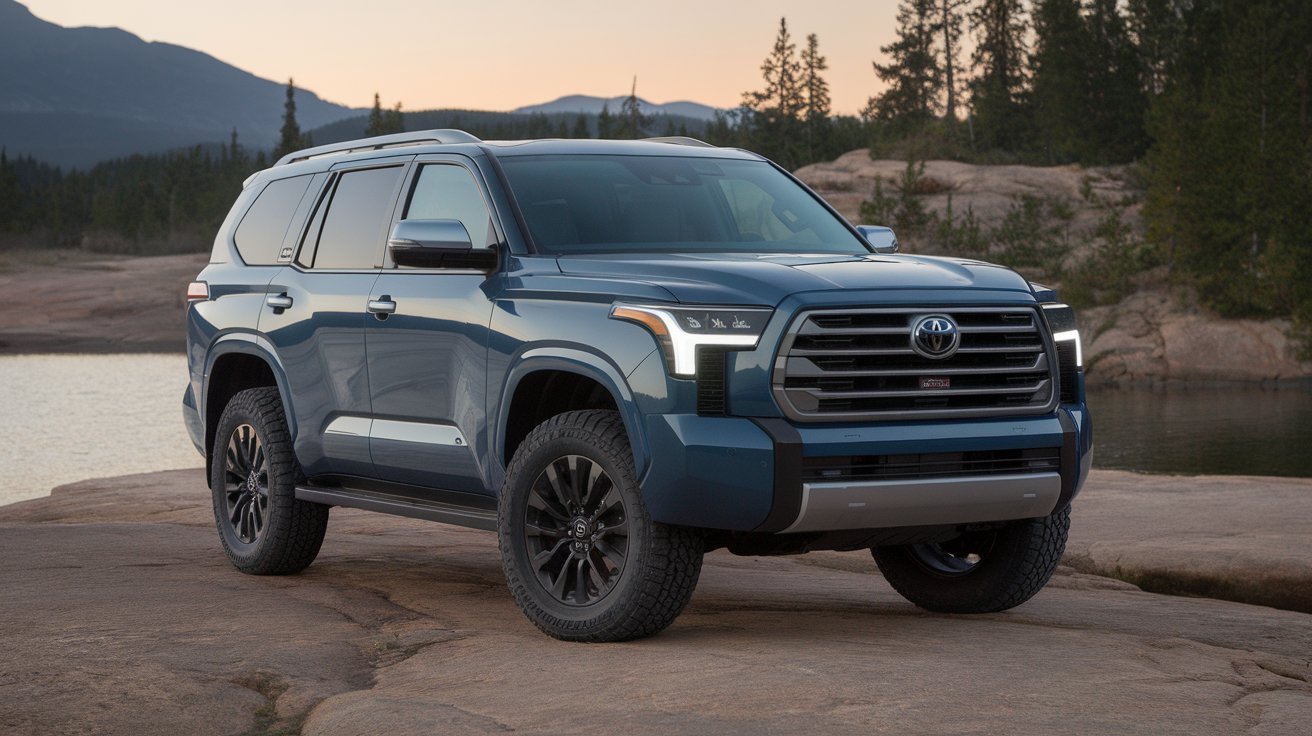
The 2025 Toyota Sequoia Platinum brings full-size SUV capability together with premium comfort, advanced technology, and a powerful hybrid powertrain. Positioned above the SR5 and Limited trims, the Platinum is designed for buyers who want a large three-row SUV that can handle family transportation, long-distance travel, and serious towing without giving up upscale features.
With a 437-horsepower i-FORCE MAX twin-turbo V6 hybrid engine, substantial torque, sophisticated interior equipment, and a strong body-on-frame platform, the 2025 Sequoia Platinum occupies an interesting position in the full-size SUV market. Toyota lists the Platinum at a $79,570 starting MSRP for the 2025 model year, while its EPA-estimated fuel economy is 19 mpg city and 22 mpg highway.
2025 Toyota Sequoia Platinum Powertrain and Performance
The heart of the 2025 Toyota Sequoia Platinum is Toyota’s i-FORCE MAX twin-turbocharged 3.4-liter V6 hybrid powertrain. It produces 437 horsepower and 583 lb.-ft. of torque, giving this large SUV the muscle needed for highway acceleration, steep grades, loaded family trips, and towing.
Rather than using a traditional naturally aspirated V8, Toyota combines turbocharging with hybrid assistance. This approach delivers substantial low-end torque while also providing an efficiency advantage over many conventional full-size SUVs.
The Sequoia uses a 10-speed automatic transmission, and the Platinum is available with four-wheel drive. Its body-on-frame construction uses a fully boxed high-strength steel ladder frame, while the suspension consists of an independent double-wishbone front setup and a coil-spring multi-link rear suspension.
For buyers who need a vehicle capable of doing more than carrying passengers, this combination is important. The Sequoia Platinum feels engineered around the requirements of a genuine full-size utility vehicle rather than simply being a large crossover.
Platinum Trim Design and Exterior Appearance
The Sequoia Platinum has a commanding road presence. Its large grille, sculpted body, substantial wheel arches, LED lighting, and elevated driving position give it the visual character expected from a premium full-size Toyota SUV.
The Platinum measures approximately 208.1 inches long and 79.8 inches wide, with an approximately 74.5-inch overall height according to Toyota’s 2025 specifications. Ground clearance is 8.6 inches, while the wheelbase measures approximately 122 inches.
The design also serves a practical purpose. A large SUV needs enough physical space to accommodate three rows, towing equipment, cargo, and passengers while maintaining stability at highway speeds.
The Platinum’s appearance sits between rugged utility and upscale refinement. Buyers who want a more specialized off-road appearance can look toward the TRD Pro, while the Platinum focuses more heavily on luxury, technology, comfort, and premium everyday usability.
A Premium Three-Row Interior
Inside, the 2025 Toyota Sequoia Platinum emphasizes comfort and technology. The Platinum provides seating for seven passengers, using a second-row captain’s-chair configuration rather than the eight-passenger arrangement offered on lower trims.
The first two rows provide generous space, while the third row benefits from Toyota’s sliding-seat and adjustable cargo approach. Toyota describes the Sequoia as having a 6-inch sliding third row and an adjustable cargo shelf system, allowing owners to change the balance between passenger and luggage space.
One important characteristic of the Sequoia is that its cargo configuration is designed around versatility. With the third row in use, owners can still carry everyday luggage and shopping items. Folding and adjusting the rear seating expands the available cargo area for larger loads.
The Platinum trim also moves the cabin toward a more luxurious experience through premium seating, upgraded materials, advanced climate-control features, and additional convenience equipment. For families spending several hours on the road, these details can make a significant difference.
Technology and Infotainment Features
Technology is another major strength of the 2025 Sequoia Platinum. Toyota equips the 2025 Sequoia lineup with a 14-inch Toyota Audio Multimedia touchscreen, along with wireless compatibility for Apple CarPlay and Android Auto.
The large display provides a modern interface for navigation, entertainment, vehicle information, and connected features. The Platinum’s premium positioning also brings additional convenience and technology features designed to make daily driving easier.
A large touchscreen is particularly useful in a vehicle of this size because the driver may need to manage navigation, audio, climate settings, and towing-related information while maintaining awareness of the road.
The Sequoia also incorporates connected services and available advanced driver-assistance technologies. These systems do not replace attentive driving, but they can provide useful assistance during highway travel and busy traffic conditions.
Towing Capacity and Utility
One of the biggest reasons to consider the 2025 Toyota Sequoia Platinum is towing capability. Toyota rates the Platinum for a maximum towing capacity of 9,010 pounds, depending on configuration. Toyota’s specifications list 9,010 pounds for both 4×2 and 4×4 Platinum configurations.
That capacity makes the Sequoia suitable for a wide range of recreational and practical towing applications. Depending on the trailer and its loaded weight, owners may use a Sequoia for boats, campers, utility trailers, and other substantial equipment.
The SUV also includes a standard trailer hitch, while Toyota offers towing-oriented technology such as trailer guidance and assistance features on applicable configurations.
When towing, the actual safe trailer weight depends on factors such as passengers, cargo, tongue weight, equipment, and the vehicle’s specific configuration. Therefore, owners should always follow the vehicle’s official towing specifications rather than relying only on the maximum advertised figure.
Safety and Driver-Assistance Technology
The 2025 Sequoia includes Toyota Safety Sense 2.5, Toyota’s collection of active safety and driver-assistance technologies. The package includes features such as Pre-Collision System with Pedestrian Detection, Dynamic Radar Cruise Control, Lane Departure Alert, Automatic High Beams, Road Sign Assist, and Lane Tracing Assist, with availability depending on configuration.
The Pre-Collision System is designed to detect certain vehicles and pedestrians and can provide warnings or braking assistance under qualifying conditions. Lane Departure Alert can warn when the vehicle appears to leave its lane unintentionally, while Lane Tracing Assist can help maintain vehicle positioning when appropriate lane markings or preceding vehicles are detected.
These technologies are intended as driver assistance, not autonomous driving. Drivers remain responsible for controlling the vehicle and paying attention to surrounding traffic, weather, road conditions, and other hazards.
Fuel Economy, Price and Ownership Considerations
The 2025 Toyota Sequoia Platinum starts at approximately $79,570 before applicable taxes, fees, options, and destination charges. Toyota lists fuel economy for the Platinum at 19 mpg city and 22 mpg highway.
Those figures reflect the realities of a large, powerful SUV. The Sequoia is not designed to compete with compact hybrids for fuel consumption. Instead, its hybrid system provides substantial power while helping improve efficiency compared with what might otherwise be expected from a vehicle of this size and capability.
Toyota also highlights an enhanced hybrid battery warranty covering qualifying Toyota hybrid batteries for 10 years from the date of first use or 150,000 miles, whichever comes first, for vehicles from the 2020 model year onward.
For ownership, the Platinum’s appeal comes from its combination of premium equipment, hybrid power, three-row practicality, towing ability, and Toyota’s established SUV platform. Buyers should nevertheless consider the vehicle’s large dimensions, purchase price, fuel costs, insurance, tires, and maintenance requirements before making a final decision.
Final Thoughts on the 2025 Toyota Sequoia Platinum
The 2025 Toyota Sequoia Platinum is a full-size SUV built for buyers who want considerably more than basic transportation. Its 437-hp i-FORCE MAX hybrid powertrain, 583 lb.-ft. of torque, three-row seating, 14-inch multimedia display, sophisticated safety technologies, and approximately 9,010-pound maximum Platinum towing capacity give it a broad range of capabilities.
The Platinum trim adds an upscale dimension to the Sequoia formula, making it suitable for families who spend significant time traveling while still requiring genuine truck-based utility. Its body-on-frame construction and powerful hybrid system provide the foundation for towing and heavy-duty use, while the premium cabin and modern technology make everyday driving more comfortable.
For 2025, the Toyota Sequoia Platinum represents a combination of full-size SUV strength, hybrid performance, luxury-oriented comfort, modern connectivity, and family practicality. For buyers researching a premium three-row SUV with substantial towing capability, it remains an important model to examine alongside the rest of the full-size SUV segment.

2025 Toyota Sequoia Platinum: Luxury, Power, Features, Towing and Complete Guide

Dan Cogdell: Biography, Legal Career, Notable Cases, and Professional Background in 2026

iRobot Roomba Combo Dust Bin/Tank With Clean Base Function: Complete 2026 Guide

Eloise Christina Schwarzenegger Pratt: Biography, Family, Parents, Early Life, and Growing Public Interest

Who Is Judy Parsons? The Untold Story of Jim Parsons Mother

Chrome Music Lab: A Creative and Interactive Way to Explore Music Online
-
 Celebrity2 months ago
Eloise Christina Schwarzenegger Pratt: Biography, Family, Parents, Early Life, and Growing Public Interest
-
 Celebrity3 months ago
Who Is Judy Parsons? The Untold Story of Jim Parsons Mother
-
 Entertainment2 months ago
Chrome Music Lab: A Creative and Interactive Way to Explore Music Online
-

 Celebrity2 months ago
Sophia Rose Stallone: Biography, Career, Family, Education, Podcast, and Growing Influence
-

 Celebrity3 months ago
Who Is Nanette Bledel? The Untold Story of Alexis Bledel’s Mother
-

 Blog2 months ago
ThriftyEvents Net: The Complete 2026 Guide to Budget-Friendly Event Planning, Smart Resources, and Creative Celebration Ideas
-

 Celebrity3 months ago
Who Was Santa Gandolfini? James Gandolfini’s Mother
-

 Business2 months ago
www.BlueFlamePublishing .net: The Complete 2026 Guide to Publishing, Self-Publishing, Book Marketing, and Author Success